

Living in Cortona: What to Know Before Moving to Tuscany
Cortona is one of those places that people visit once and never quite stop thinking about. Set on a ridge above the Val di Chiana, with views that stretch across Tuscany toward Lake Trasimeno and the hills of Umbria, this ancient Etruscan hilltown has been drawing international visitors — and international residents — for decades. Since Frances Mayes’ memoir brought it to a global audience in the late 1990s, Cortona has become one of the most recognised and sought-after destinations in Tuscany for those considering a move to Italy.
But what is it actually like to live here? What does daily life look like, what are the practical realities, and what should you know before making the move? This guide is designed to give prospective buyers and future residents an honest and useful picture of life in Cortona and the surrounding area.
Life in Cortona: The Practical Reality
Cortona is a genuinely functioning Italian town, not simply a tourist destination. It has:
- A full range of everyday services: Supermarkets, pharmacies, banks, doctors, schools, and weekly markets. The town centre is compact and walkable, and most daily needs can be met locally.
- Good transport connections: The train station at Camucia-Cortona connects the area to Arezzo, Florence, Rome, and beyond. By car, Florence is approximately 90 minutes away and Rome under two hours.
- A strong international community: Cortona has a well-established community of international residents — particularly American and British — which can ease the transition for newcomers and provides a ready-made social network.
- Seasonal rhythms: Like most Tuscan hilltowns, Cortona has distinct seasons. Summer is lively and international, with festivals, markets, and visitors. Winter is quieter and more authentically local — which many long-term residents consider one of the area’s most appealing qualities.
- Access to wider Tuscany and Umbria: Cortona’s position on the Tuscany-Umbria border makes it an ideal base for exploring both regions. Siena, Montepulciano, Pienza, Perugia, Assisi, and Lake Trasimeno are all within an easy drive.
What Type of Property Will You Find in and Around Cortona?
The Cortona property market offers significant variety:
- Historic apartments in the medieval town centre, often featuring original stone, exposed beams, and views over the surrounding countryside
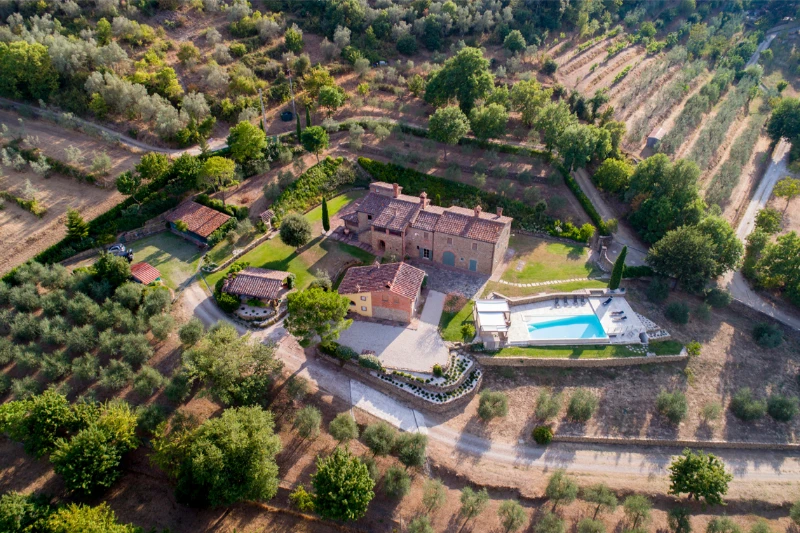
- Stone farmhouses and coloniche in the surrounding countryside, ranging from properties requiring full renovation to beautifully restored residences with pools and gardens
- Villas and larger properties with land, olive groves, and outbuildings on the hillsides surrounding the town
- More modern residential properties in the lower town of Camucia, which offer practical convenience at lower price points
The most sought-after properties — and those that hold their value most reliably — are typically the stone rural properties with views and character in the hills surrounding Cortona. These are the properties that attract the strongest international interest and that represent the clearest long-term investment in the area.
Making the Move: Practical Considerations for International Buyers
For those planning to relocate to Cortona from abroad, there are a number of practical steps beyond the property purchase itself that need to be addressed:
- Residency: EU citizens can establish residency relatively straightforwardly. Non-EU buyers typically need to explore visa options, including the Italian Elective Residency Visa, which is designed for those with sufficient passive income.
- Italian language: While Cortona’s international community means English is widely understood, learning Italian will significantly enrich your experience of daily life and local relationships.
- Banking: Opening an Italian bank account is an early practical priority. Your agency can advise on the process and timing in relation to your purchase.
- Healthcare: Italy has a public health system that residents can access. Private health insurance is also advisable, particularly in the early stages of residency.
- Tax position: Becoming an Italian tax resident has implications that should be discussed with an accountant familiar with both Italian law and the tax rules of your home country before you make the move.
At Alunno Immobiliare, we support international buyers not just through the property purchase but through the broader process of settling in the area. Our network of local professionals and contacts means that new arrivals have access to practical guidance and support well beyond the day of completion.
Is Cortona a good place to live year-round, or is it mainly for holidays?
Cortona works well as a year-round residence. The town has all the services needed for daily life, a genuine local community, and a winter that many long-term residents consider one of its most appealing seasons — quiet, authentic, and beautiful.
How easy is it to get around without a car?
A car is strongly advisable for anyone living in or around Cortona, particularly for rural properties. The town centre itself is walkable, and there are good train connections from Camucia, but the broader area — and most rural properties — requires a car for practical daily life.
Are there international schools near Cortona?
There are no international schools directly in Cortona, but the area’s international community has historically been well-served by private schooling options in nearby cities and by homeschooling arrangements. This is worth researching in detail if you have school-age children.
What is the process for establishing Italian residency as a non-EU buyer?
The process varies depending on nationality and personal circumstances. The Italian Elective Residency Visa is a common route for non-EU buyers with sufficient passive income. An Italian immigration lawyer or specialist can guide you through the options most relevant to your situation.