


Relocation to Italy from Tuscany to Umbria: A Complete Guide for International Buyers
The years following the pandemic accelerated a trend that was already underway: a significant and growing number of people from the United States, the United Kingdom, Northern Europe, and beyond choosing to relocate to Italy permanently or semi-permanently. The reasons vary — some are drawn by quality of life, others by the food, the culture, the landscape, or the pace of a different way of living. Many are motivated by the practical advantages that remote work has made possible: the ability to live somewhere beautiful without sacrificing professional income.
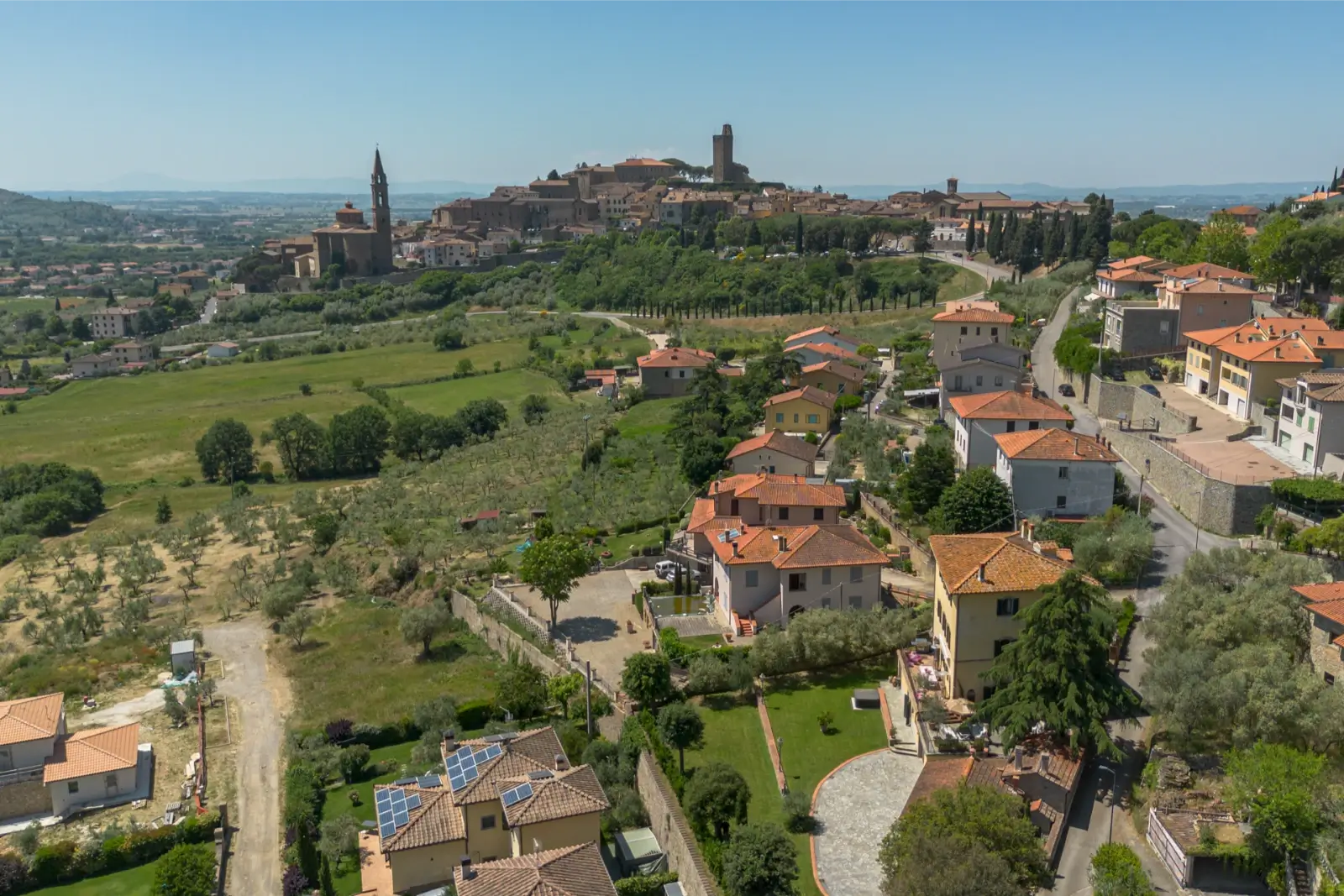
For those looking at central Italy, the area between Tuscany and Umbria — and specifically the Cortona area, with its strong international community and its strategic position between two of Italy’s most beautiful regions — has emerged as one of the most sought-after destinations for international relocators. This guide is designed to give those considering this step a clear, practical overview of what it involves.
Choosing the Right Base: Tuscany vs Umbria
One of the first decisions for anyone relocating to central Italy is which region to focus on — or whether to remain open to both. There are meaningful differences that are worth understanding:
- Tuscany (and specifically the Cortona area): Higher international profile, well-established expat community, strong infrastructure, and consistent property values. Entry prices for quality rural properties are typically higher than in Umbria.
- Umbria: Increasingly popular with international relocators, offering exceptional landscape quality, greater tranquillity, and generally more accessible property prices. The pace of life is slightly slower, the landscape less intensively managed, and the international community growing but less established than in parts of Tuscany.
- The border area around Cortona and Lake Trasimeno: For many relocators, this is the most compelling option — the benefits of both regions, excellent accessibility, a genuine international community, and the full range of property types at a variety of price points.
The Practical Steps of a Successful Relocation
A successful relocation to Italy involves a number of parallel processes that benefit from careful planning:
- Visa and residency: EU citizens can establish residency in Italy with minimal bureaucracy. Non-EU citizens — particularly those from the US, UK, Canada, and Australia — typically need to explore visa options. The Italian Elective Residency Visa is a common route for those with sufficient passive income or a pension. Digital nomad visas have also been introduced for those earning income remotely.
- Property purchase: The property purchase itself is the anchor of the relocation — and it should be approached with the same care and professional support as any significant financial decision.
- Italian tax residency: Becoming an Italian tax resident has implications that should be thoroughly understood before the move, including potential obligations in your home country. Italy also offers attractive flat-tax regimes for some categories of new residents.
- Banking and finance: An Italian bank account, understanding of Italian payment systems, and clarity on pension or income transfers are all practical necessities to address early.
- Healthcare: Italy’s public health system (SSN) is available to residents. Private health insurance is advisable during the transition period and in some cases beyond.
- Language: Learning Italian significantly enriches daily life and social integration. Even a basic level of Italian opens doors that are closed to those who rely entirely on English.
How Alunno Immobiliare Supports the Full Relocation Process
At Alunno Immobiliare, we understand that for many of our international clients, the property purchase is not an isolated transaction — it is the central element of a much larger life change. Our role as a property finder in Cortona naturally extends into broader relocation support: connecting clients with the professionals, services, and local contacts needed to make the transition as smooth as possible.
We have supported clients relocating from the United States, the United Kingdom, and across Europe through the full process — from initial property search and purchase through to practical settling-in support, utility connections, renovation coordination, and introduction to the local community. Our clients do not simply buy a property through us — they gain a long-term local partner who remains available and involved well beyond the completion of the transaction.
What is the best visa option for relocating to Italy from the US or UK?
The Italian Elective Residency Visa is the most common route for those relocating from outside the EU who have sufficient passive income, savings, or a pension. Italy has also introduced a digital nomad visa for remote workers. Immigration rules change, so specialist legal advice is essential for your specific situation.
How long does the full relocation process typically take?
From the initial decision to the point of settled living in Italy, most international relocators find the process takes between 12 and 24 months. The property purchase itself typically completes in 6 to 9 months; the surrounding administrative and practical steps run in parallel.
Is the Cortona area suitable for families with children?
The Cortona area has a functioning local school system and a growing international community that includes families. It is worth researching schooling options in detail, as international schools are not directly in Cortona. Many families find the area an excellent environment for children, with a safe, outdoor-oriented lifestyle.
What is the cost of living like in the Cortona area compared to major cities?
The cost of living in and around Cortona is generally significantly lower than in major Italian cities such as Milan, Florence, or Rome, and dramatically lower than equivalent quality of life in cities like London or New York. Food, local services, and everyday expenses are very reasonable; the main cost commitment is the property itself.